

Choosing the right measures to preserve metal structures in specific environments
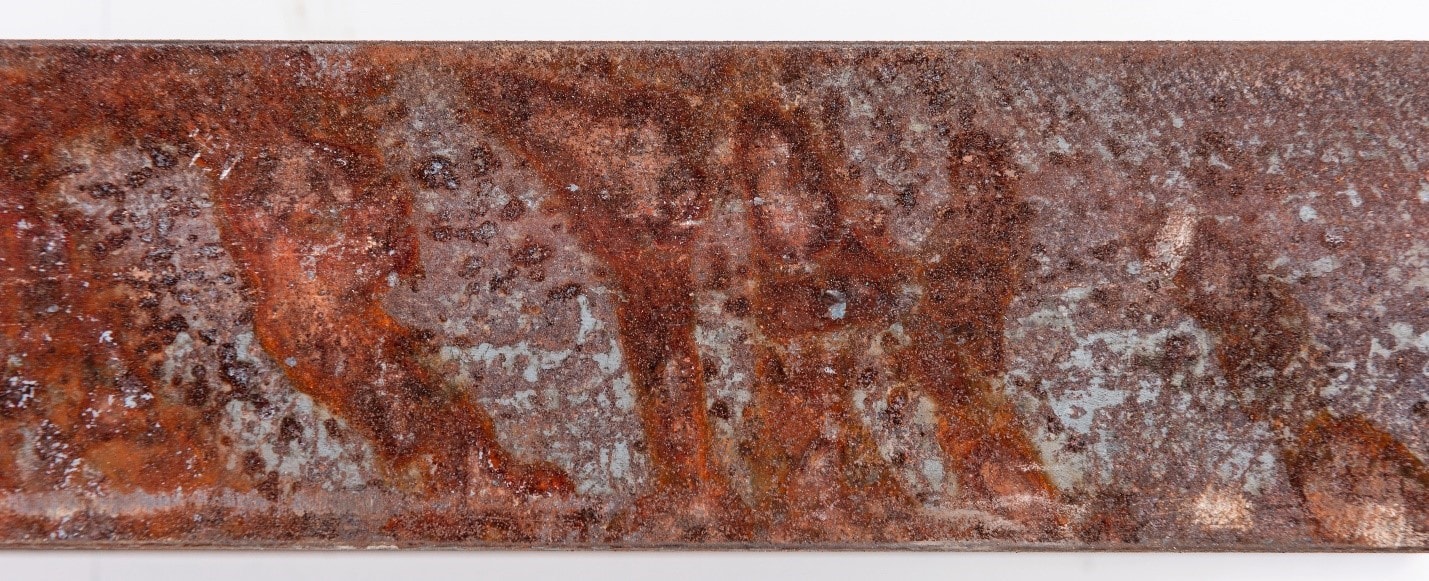
Protecting steel structures from corrosion is crucial to preserving their integrity. Doing so not only reduces the risk of structural failure, but also helps avoid expensive repairs and renovations while also ensuring the expected lifetime of the application is met. As a result, it is essential to meticulously choose the right corrosion protection measure for any given metal structure, its application and the surrounding environment.
The majority of fastening and installation products available on the market are made from unalloyed steel (i.e. mild steel or carbon steel). These require corrosion protection. In most environments, the corrosion rate of carbon steel is usually too high for a satisfactory application (the corrosion rate is around 20 micrometers per annum (μm/year in a rural outdoor atmosphere and rises to more than 100 μm/a in coastal environments.)
In the previous article we highlighted and analyzed the importance of the corrosivity of the environment. Having now defined the environment, which corrosion protection is most suitable for which conditions?
Zinc coatings
Zinc is an excellent choice for protecting carbon steel from corrosion. This is mainly because the corrosion rate of zinc is more than ten times lower than that of steel (around 0.5 μm/a in rural/urban atmospheres and rising up to around 5 μm/a in coastal environments). Several suitable processes are available for applying zinc coatings to steel parts, ranging from small screws to channels of several meters in length. There are five major methods of applying zinc coatings, which we explore below.
Electrogalvanization (Electroplating)
Electrical current is passed through an aqueous solution containing zinc ions. This leads to the deposition of zinc metal on the steel substrate. Prior to this step, the parts usually undergo a cleaning and pickling process. Passivation takes place after the deposition of zinc. Electrogalvanization is an excellent way to protect small threaded parts due to the formation of homogeneous and dense coatings. General coating thicknesses can vary from 5 to 15μm and the process is mostly used for indoor applications for C1 and C2. Examples: Brackets, Angle Connectors, Threaded Rods.
Hot-dip Galvanizing (Molten Zinc-bath)
During this process, steel sheet is roll-formed and welded before it is dipped in a hot, molten zinc-bath. Large parts up to several meters in size can be coated using this technique. Small parts like bolts and anchors are centrifuged after hot-dip galvanizing in order to remove excess zinc from the threads. The typical thickness is between 35 μm and 100 μm, depending on the material thickness and the steel composition. Dipping usually takes several minutes. Examples: (welded) Brackets and Girders.
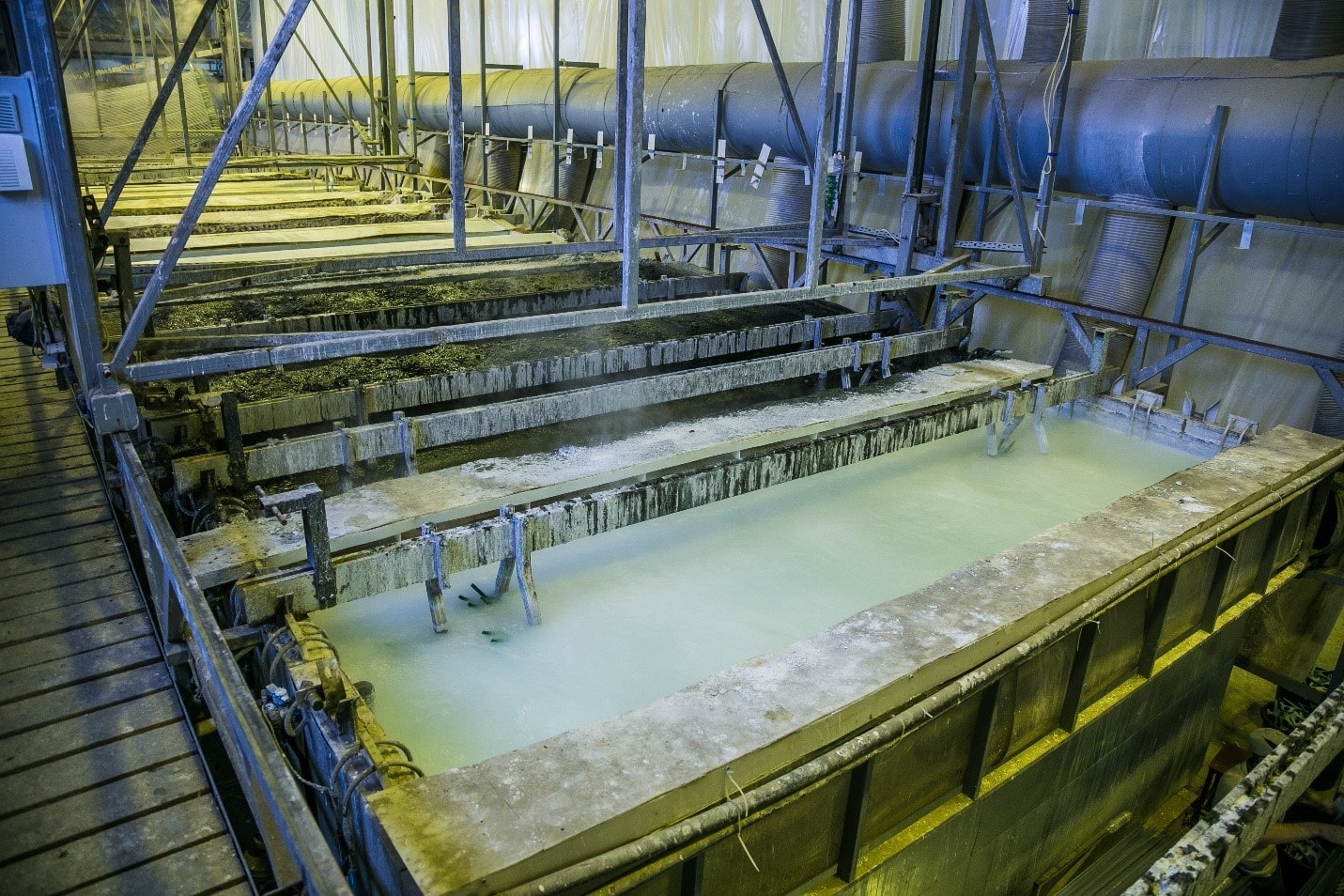
Galvanizing of acid etching containers in galvanic workshop
Continuous Hot-dip Galvanizing / Sendzimir Galvanizing
Sheet metal from coils is drawn continuously through a bath of molten zinc after the surface has been cleaned and subjected to a special annealing (heat treatment) process. The zinc bath contains small amounts of aluminum (Al). The aluminum reacts with the steel surface to create an inhibition layer with a thickness of a few nanometers. This inhibits the formation of zinc-iron phases. The resulting coating consists mainly of pure zinc (Z100/Z600), which can vary from 10 to 70 μm, or zinc with additives like zinc-magnesium (ZM), providing a superior corrosion protection.
Zinc alloy coatings such as electroplated zinc-nickel (ZnNi) or continuously hot-dip galvanized ZM have a significantly better corrosion performance. Typical ZM coatings contain around 2-4 % of Al and Mg and show increased corrosion protection, which is up to two times higher than that of a zinc coating with the same coating weight. Therefore, this is a highly recommended solution for outdoor coatings. Examples: MQ-F/ZM 41 (D) and MT - Channel System.
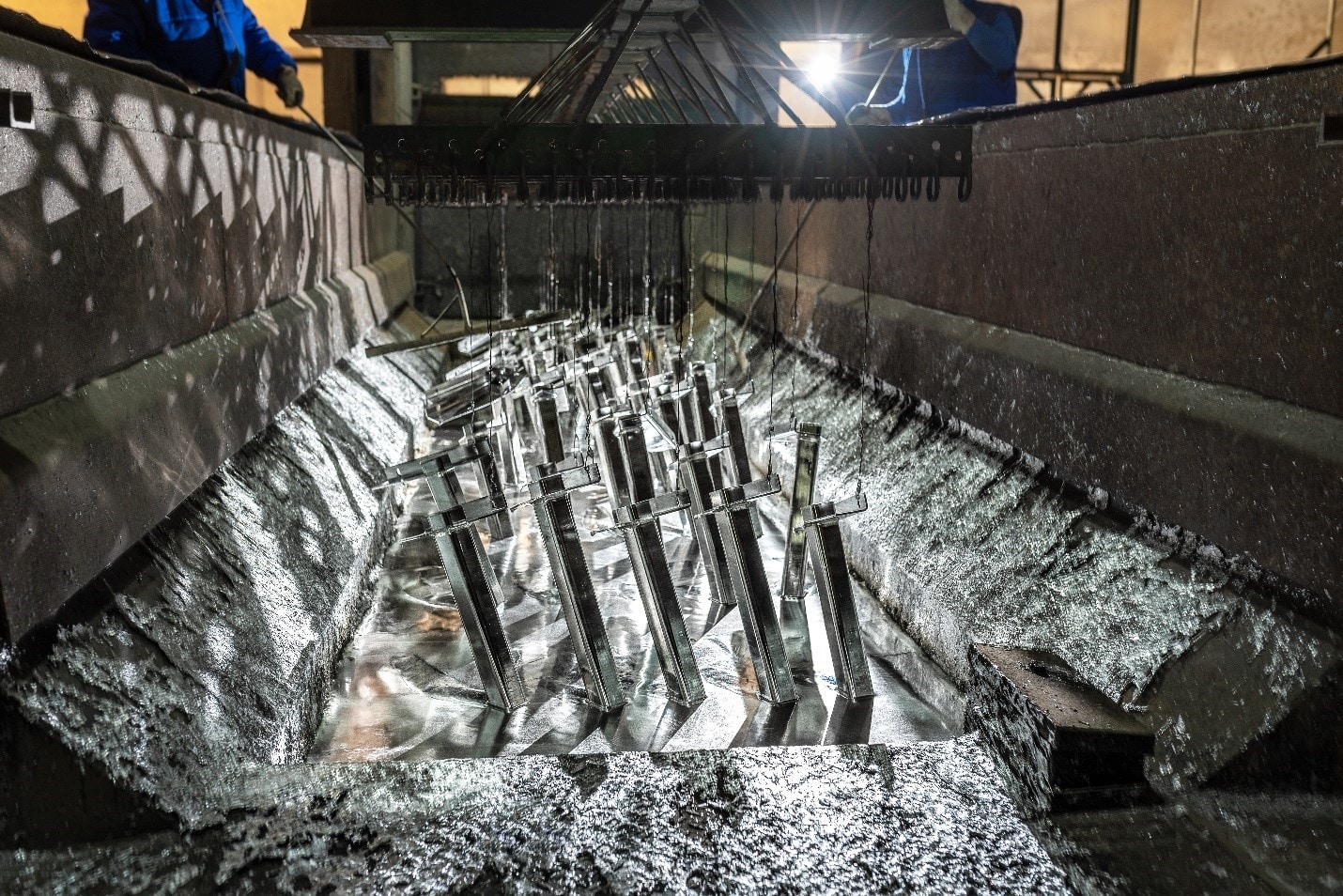
Electroplating metallic structures in a zinc bath
Sherardizing / Thermal Diffusion
Sherardizing is a method of zinc coating that utilizes a thermal diffusion process: steel parts are placed in a drum containing zinc powder and then heated to temperatures above 320 °C. The zinc is not liquid, and the coating is formed by thermal diffusion of the zinc powder on to the steel parts.
Multilayer Coating
When the corrosion protection provided by a metallic coating is not sufficient, parts can be further protected by additional coatings, usually of organic paint (with or without metallic flakes). An example of this is the multilayer coating on fasteners, consisting of an electroplated zinc-alloy coating with an additional organic top coating. Examples: MQN-C HDG PLUS, MQM-HGD PLUS.
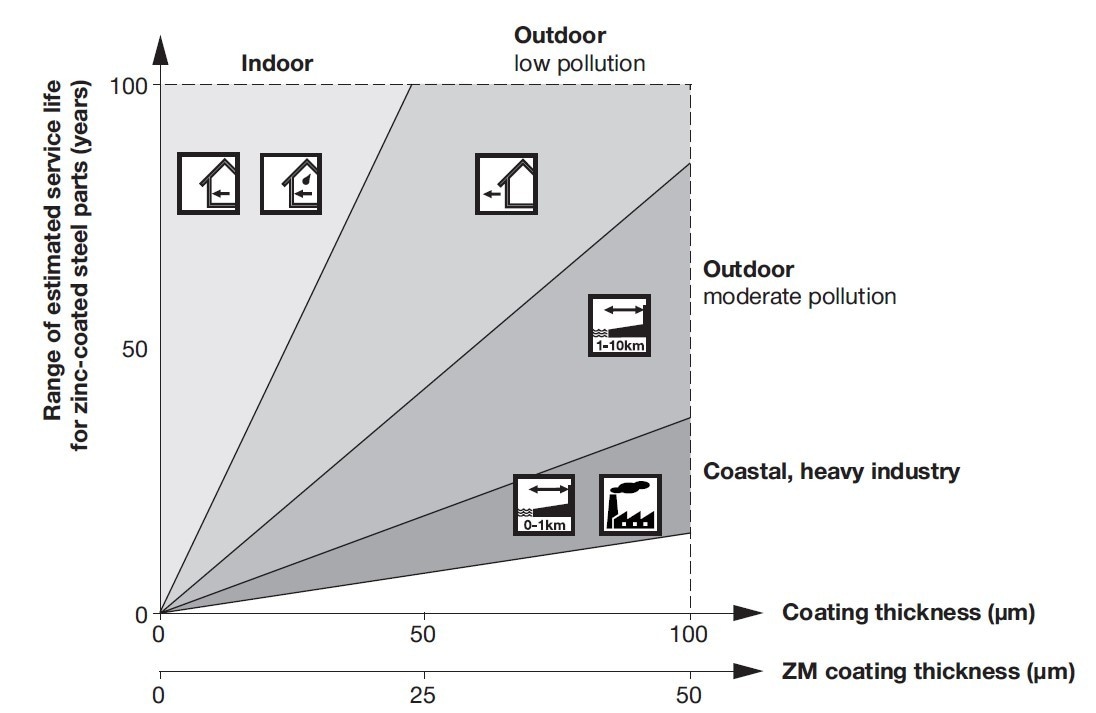
The estimated lifetime is calculated from the coating thickness deployed in a specific environment, as can be seen in this diagram.
Other corrosion protection measures
Phosphating
Steel is dipped into an acidic solution containing metal (zinc, iron) phosphate salts. The solution reacts with the steel surface and forms a micro-crystalline layer of phosphates on the surface. Oil is then applied and stays on the surface long enough to provide protection during transport. It also provides slightly increased general corrosion protection. Phosphatized products can be used only in dry indoor environments. For example, Hilti uses this process on drywall screws.
Stainless steel
Steel alloyed with at least 10.5% chromium is called stainless steel. The addition of chromium leads to the formation of a stable, very thin oxide layer (passivation layer) on the surface. Stainless steel therefore does not readily corrode or stain when in contact with water, unlike carbon steel. Nonetheless, austenitic stainless steel can be prone to corrosion in specific, highly aggressive environments such as indoor swimming pools. In such applications, highly corrosion-resistant grades of stainless steel must be used (e.g. grades with a molybdenum content of more than 6%). There are various grades of stainless steel with different levels of stability. The most common grade is alloyed with around 18% chromium and 10% nickel (A2, 304, 18/8). The resistance of stainless steels against pitting corrosion can be roughly estimated by the PREN (Pitting Resistance Equivalent Number). The PREN is based on the chemical composition of steel, considering the amount of chromium, molybdenum and nitrogen
